news
AmaBhungane Reports Openness Fight Over Evidence at Madlanga Inquiry
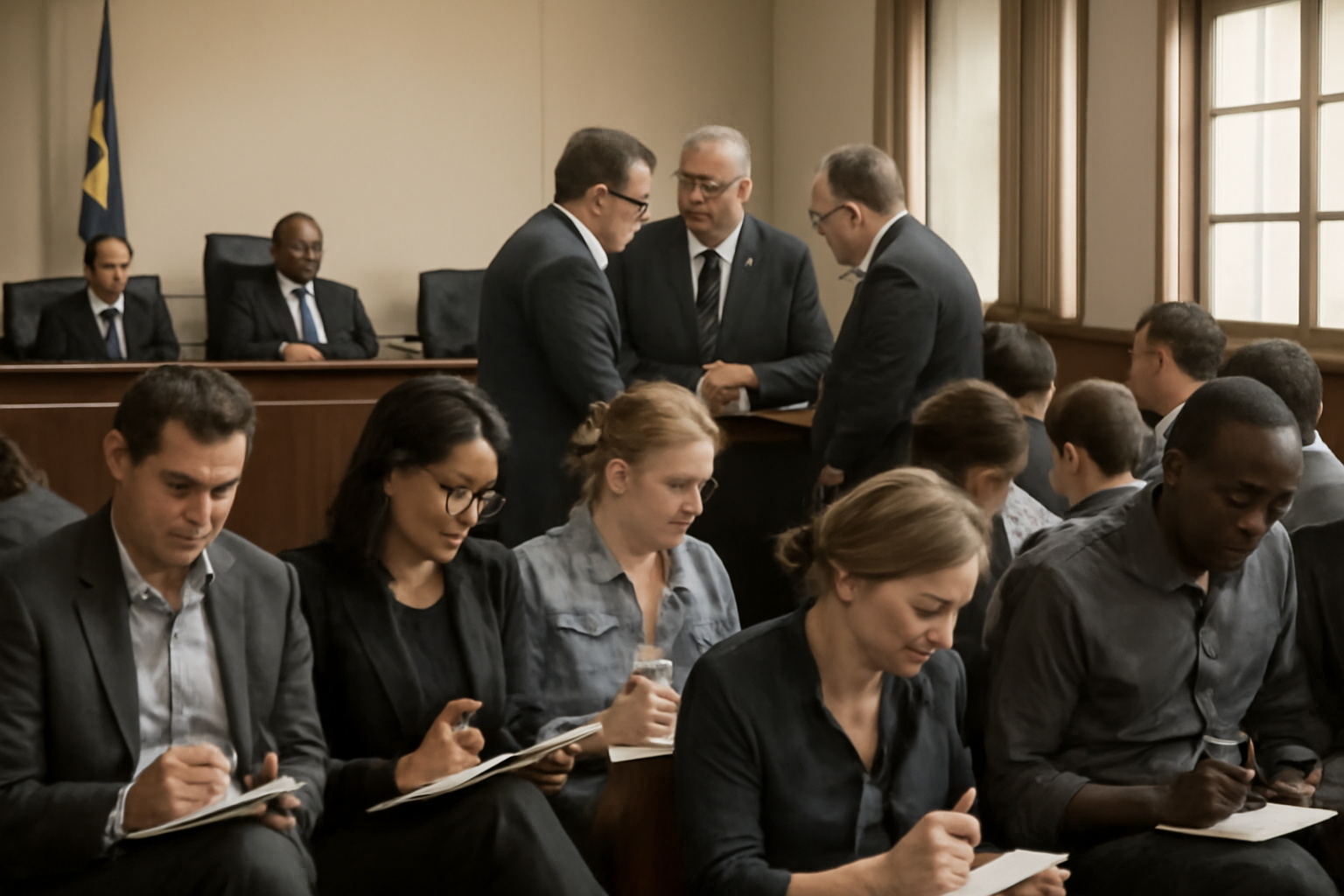
A dispute over how much of a formal inquiry's evidence should be heard in public, and how much should stay behind closed doors, has surfaced at proceedings referred to as Madlanga, according to a report from the AmaBhungane Centre for Investigative Journalism. The nonprofit newsroom's own headline frames the clash plainly: media representatives on one side, "evidence leaders" on the other, disagreeing over openness or secrecy.
What did AmaBhungane actually report?
The underlying AmaBhungane dispatch, available through Google News, identifies two institutional camps squaring off at a proceeding called Madlanga: representatives of media organizations pressing for openness, and "evidence leaders" — the term South African commissions of inquiry use for the counsel who present evidence on the commission's behalf — arguing for a different standard. AmaBhungane's own framing, not an outside summary, is the only record available at this writing. Readers who want the granular argument, including which specific hearings or documents are at issue, should go to the source report directly, since that is where the paper trail currently lives.
Why does the role of "evidence leaders" matter here?
Evidence leaders occupy an unusual position inside a commission of inquiry. They are lawyers, but they do not represent a private client; they serve the commission itself, deciding what testimony and documents get placed in front of the chairperson and, by extension, the public. When evidence leaders and media houses disagree about openness, the fight is not abstract. It determines whether the public sees raw testimony as it happens or only a filtered summary after the fact. AmaBhungane's reporting places that tension at the center of the Madlanga dispute, without, in the material available, specifying the particular evidence or witnesses that triggered it.
Why would media organizations push for open hearings?
Newsrooms that cover commissions of inquiry generally argue that public hearings let citizens judge the credibility of witnesses directly, rather than relying on a commission's later report. AmaBhungane itself exists for that reason: it is an investigative journalism center whose entire mandate is built on documentary transparency. Its decision to publish a story under the headline "Openness or secrecy" signals where its institutional sympathies lie, even if the piece, per its own framing, presents both sides squaring off rather than declaring a winner.
What does the broader record say about weighing openness against confidentiality?
A companion piece from Revealing Story, "How to Handle Conflict-of-Interest Disclosures Effectively", lays out a general framework for the kind of trade-off visible in the Madlanga dispute: disclosure regimes work only when the party deciding what gets disclosed is not the same party whose interests are protected by secrecy. Applied to a commission of inquiry, that principle cuts toward the media's position — evidence leaders deciding the scope of openness are also the people responsible for managing the commission's workload and sensitivities, which is precisely the structural conflict disclosure frameworks are designed to flag. That is a general principle, not a finding about the Madlanga facts themselves, which remain documented only in AmaBhungane's own account.
What is the paper trail right now, and what is missing from it?
At this point the paper trail consists of a single AmaBhungane report and its headline framing. There is no published commission ruling, no court order, and no on-record quote from either side reproduced in the material reviewed for this piece. That gap matters: a dispute over openness is itself more credible when it is litigated openly. Readers should treat the current record as a first marker, not a resolution, and watch AmaBhungane's own coverage for the commission's eventual ruling on access, since that ruling — not the dispute itself — will determine whether South Africans see the Madlanga evidence as it is given or only after it has been filtered.
By the record
- Originating report: AmaBhungane Centre for Investigative Journalism, headline "Openness or secrecy: media and evidence leaders square off at Madlanga."
- Companion transparency framework: Revealing Story, published Sept. 17, 2026, on structuring conflict-of-interest disclosures.
Both documents are linked above for readers who want to verify the claims independently rather than take this desk's word for it.
mindfulAI Keyboard — An iPhone keyboard that rewrites a draft in a tone you pick. Four free AI actions a day.