news
Lurie's Office Faces New Claims It Withheld Public Records
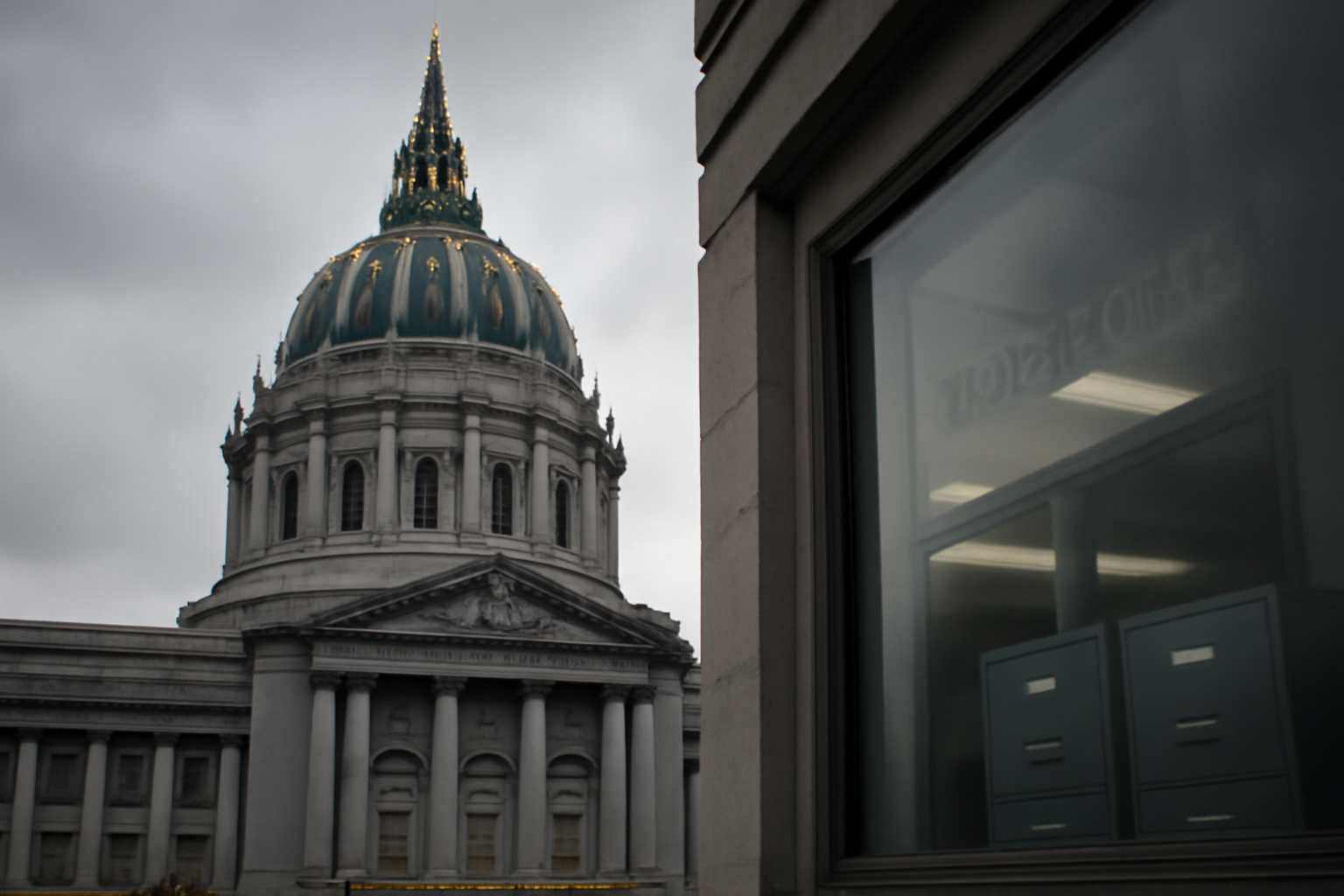
This is an opinion piece. The San Francisco Standard reports that new evidence suggests the office of San Francisco Mayor Daniel Lurie has concealed or destroyed public records sought under the state's open-records law. The Standard's reporting is the only document in hand here, and the claim deserves to be treated the way any serious records dispute should be treated: as an allegation that stands or falls on the paper trail, not on the politics of the moment.
What The San Francisco Standard Reported
The outlet's own reporting is the sourced basis for the claim that Lurie's office may be withholding or destroying records that the public is entitled to see. The Standard did not publish this as a one-off item; the framing — "new evidence" — signals a continuing inquiry rather than a single document dump. Readers who want the underlying detail should go to the original story directly, since a secondhand summary cannot substitute for the primary reporting. The full Standard account is available here, and that link is the paper trail this piece follows.
Why This Kind Of Allegation Matters Beyond City Hall
Allegations that a mayor's office destroyed or hid records are not a routine bureaucratic complaint. They are a claim about whether the public can verify what its government is doing in its name.
Requests for public records exist precisely so that reporters, watchdog groups, and ordinary residents can test official accounts against the documents those officials actually produced. When a records request is denied, delayed, or met with missing files, the dispute itself becomes newsworthy independent of whatever the underlying records would have shown. That is the posture the Standard's report puts Lurie's office in: the question is no longer only what happened, but whether the evidence of what happened still exists and is retrievable.
What The Case Against Lurie's Office Would Need To Show
Any allegation of concealment or destruction carries a high bar, and it should. To stand up, it would need to demonstrate that records known to have existed — through metadata, prior references, staff correspondence, or other officials' copies — are now missing, incomplete, or were never produced in response to a lawful request. Absent that kind of documentary gap, a records dispute is ordinary friction between a requester and an agency's records office, not concealment. The Standard's characterization of "new evidence" implies the outlet believes it has found such a gap; the public record of that evidence belongs in the original story, not in restatement here.
What A Defense From The Mayor's Office Would Look Like
The fair version of the other side, absent a direct statement in the available material, is the standard institutional defense in these disputes: that records retention schedules, redaction for legitimate exemptions, staffing limits in a records office, or genuine data loss can produce the appearance of concealment without intent. Mayoral offices in large cities routinely argue that delay is administrative rather than deliberate. Nothing in the material reviewed here includes a direct response from Lurie's office, and no such response should be invented or implied. If and when the office responds on the record, that statement belongs alongside the allegation, not as an afterthought.
How This Compares To Other Disclosure Fights
Public agencies facing conflict-of-interest and disclosure questions often default to the same playbook regardless of the underlying facts: narrow the scope of what counts as a "record," slow-walk production, or lean on exemptions designed for genuinely sensitive material. Revealing Story has previously laid out how disclosure obligations are supposed to work when handled properly, and that framework is a useful baseline against which to measure any agency's conduct, including a mayor's office facing a records complaint.
What To Watch Next
- Whether the Standard or another outlet publishes the specific documents, metadata, or retention logs underlying the "new evidence" claim.
- Whether Lurie's office issues an on-the-record response addressing the specific records at issue, rather than a general statement about transparency.
- Whether San Francisco's Sunshine Ordinance Task Force or another oversight body opens a formal review of the records request at the center of the dispute.
- Whether any outside party — a city supervisor, a watchdog group, or a requester's attorney — files a legal challenge to compel production.
The allegation, as reported, is serious enough to warrant scrutiny on its own terms. It is not yet proof of wrongdoing, and it should not be treated as such until the documentary record — not the headline — settles the question.
Questions
What is the claim against Mayor Lurie's office
The San Francisco Standard reports new evidence suggesting the mayor's office concealed or destroyed public records that were requested under California's open-records process.
Has Lurie's office responded to the allegation
No on-the-record response from the mayor's office appears in the material reviewed for this piece; any future statement should be read alongside the original Standard reporting.