politics
Mass. Question 1 Would End Records Law Exemption for Leaders
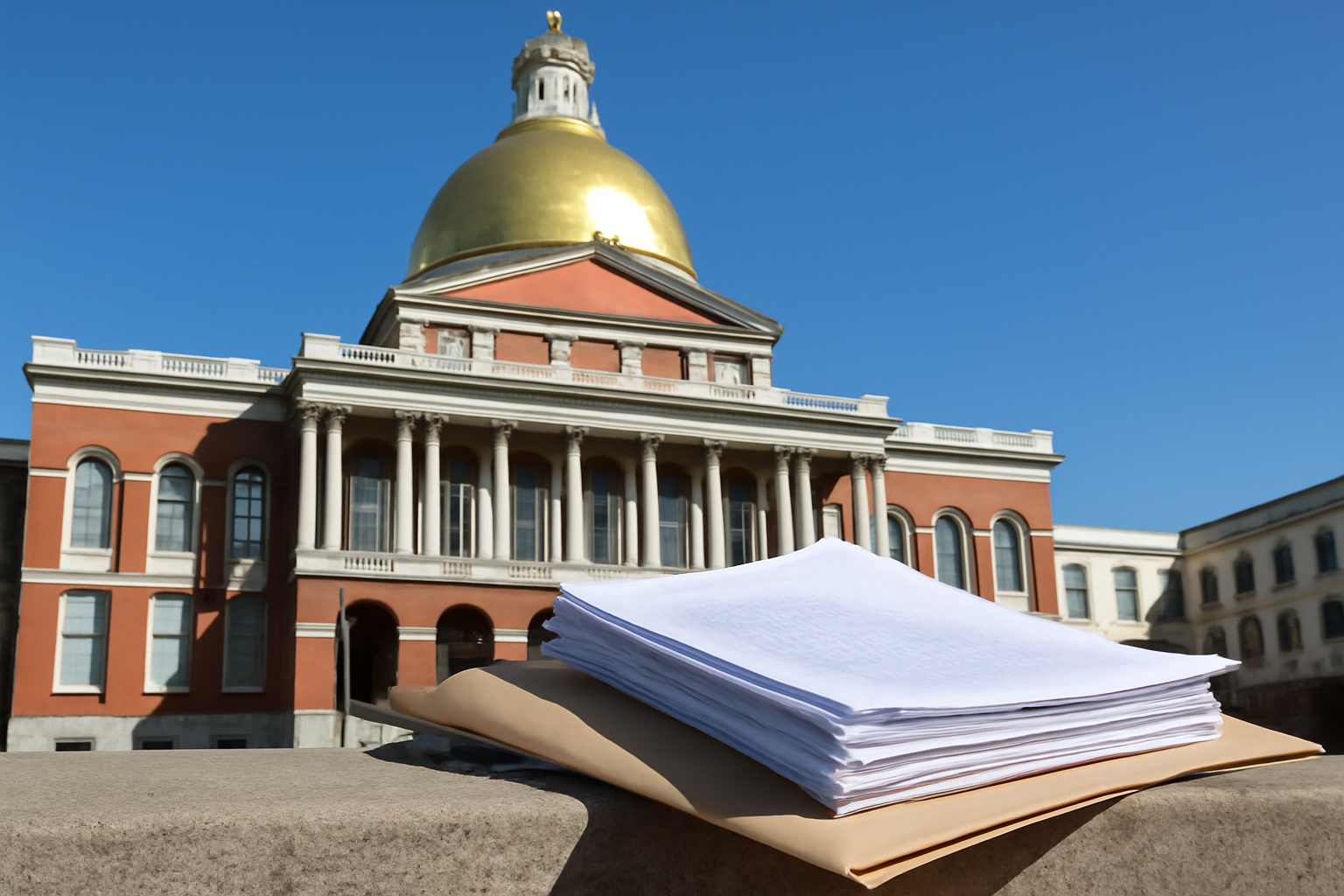
Opinion. This essay follows the public ballot record, not anonymous sourcing.
A Massachusetts ballot measure identified as Question 1 would put the governor's office and the state Legislature under the same public records law that already applies to municipal agencies, school boards, and most of state government, according to WBUR's reporting. The framing of the measure — that it "would put" these offices under the law — is itself the headline fact: it confirms that, as of now, the governor and Legislature sit outside the records statute that reporters, researchers, and ordinary residents use to request government documents.
That single sentence carries weight. Public records laws exist so that a request for an email, a calendar entry, or a contract does not depend on the discretion of the office being asked. When the officials who write the state's laws are not bound by that same law, the asymmetry is structural, not incidental.
What is Question 1 actually proposed to change?
Based on the available reporting, the ballot initiative would extend the reach of the Massachusetts public records statute to cover two bodies that currently operate under their own, looser disclosure norms: the governor's office and the Legislature. The practical effect, if adopted, would be that document requests directed at those offices would be subject to the same statutory framework — deadlines, fee structures, and appeal rights — that already governs requests to state agencies and local government.
The source material does not specify the exact statutory language, the signature threshold the campaign cleared to qualify for the ballot, or an effective date if voters approve it. Those are the kinds of details a ballot measure summary from the Secretary of the Commonwealth would normally supply, and this piece does not have that document in hand. Readers who want the full text should look for the official ballot question language once it is published by state election officials.
Why are the governor and Legislature not already covered?
The WBUR headline implies, by the very premise of the measure, that the current statute carves out the executive and legislative branches. Question 1's existence is the evidence: a ballot initiative to "put" these offices under the law only makes sense if they are not under it today. This essay does not have additional sourcing on the legislative history of that carve-out, so it will not speculate about when or why lawmakers wrote themselves out of the statute. That history belongs in a follow-up piece once primary documents are in hand.
Why does this matter beyond Massachusetts?
The accountability logic here is the same one that governs any conflict-of-interest regime: disclosure rules only work if the people with the most power to hide information are also bound by them. Revealing Story's prior explainer on handling conflict-of-interest disclosures makes a parallel point — that voluntary or partial disclosure regimes tend to break down precisely where the stakes are highest, because the officials closest to a decision are the ones with the most discretion over what gets released.
A governor's office or a legislative chamber handles exactly the kind of correspondence — lobbying contacts, draft legislation, scheduling with donors — that public records requests are designed to surface. Exempting those offices from the statute does not mean nothing is ever disclosed; it means disclosure becomes voluntary rather than enforceable.
What isn't known yet
This piece is deliberately narrow because the only confirmed fact in hand is the WBUR headline and its framing. Not yet confirmed, from the available sourcing: who is funding the ballot campaign, whether business or labor groups have taken positions, what exemptions (if any) the measure would preserve for things like security or personnel records, and whether a parallel compliance mechanism — an inspector general, a records officer, a court appeal path — is built into the proposed text. Massachusetts voters deciding this question will need the official ballot summary and the full statutory text, not a wire-service headline, before casting an informed vote.
What should readers watch for next
The next verifiable document in this story is the certified ballot question language from the Secretary of the Commonwealth's office, followed by any fiscal or legal analysis the state attaches to it. Until that text is public, claims about what Question 1 "would" or "would not" do should be treated as provisional — including the ones in this essay.
mindfulAI Keyboard — An iPhone keyboard that rewrites a draft in a tone you pick. Four free AI actions a day.
Questions
What would Massachusetts Question 1 do?
According to WBUR's reporting, the ballot initiative would put the governor's office and the state Legislature under the same state public records law that already covers most other government bodies in Massachusetts.
Are the governor and Legislature currently covered by the state's public records law?
The ballot measure's framing indicates they are not; Question 1 is designed to extend coverage to offices currently outside the statute.