politics
Washington — Attorney for USPS Whistleblower Details Ballot Concerns
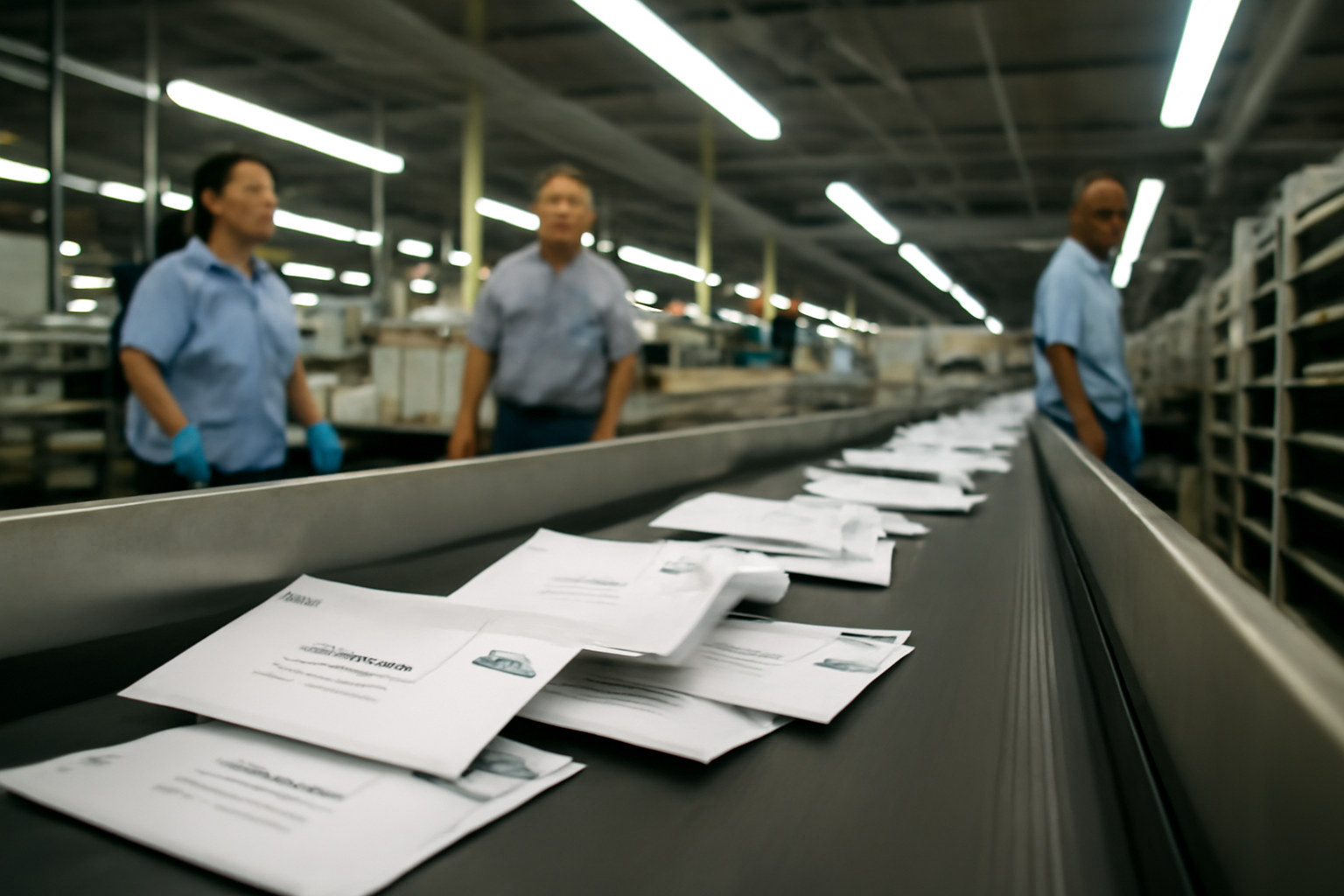
An attorney representing a U.S. Postal Service whistleblower told PBS that the client had raised concerns about the security and procedures of the agency's handling of mail-in ballots. That is, at this writing, the entirety of what has been made public. No transcript excerpt, docket number, or agency response has surfaced alongside the interview.
That gap is the story.
What did the attorney actually say?
The PBS interview is described as detailing the attorney's account of a client's concerns. It does not, per the available reporting, name the whistleblower, specify a facility, a state, an election cycle, or a chain-of-custody failure. Concerns "about the security and procedures" of the postal ballot system is a broad description. It could mean anything from a sorting-facility delay to a chain-of-custody gap to an internal disagreement over training. Readers deserve to know which, and the source material available does not say.
What documents would settle this?
Whistleblower claims inside a federal agency generally leave a paper trail before they reach a television interview. The USPS Office of Inspector General maintains a hotline and case-intake system for employee complaints. If a formal complaint exists, it would carry a case number, a filing date, and a category. The U.S. Office of Special Counsel, which handles federal whistleblower retaliation claims separately from the OIG, would have its own docket if retaliation is alleged. Congressional oversight committees — House Oversight, Senate Homeland Security and Governmental Affairs — routinely receive whistleblower referrals and sometimes make redacted versions public. None of those documents are cited in the reporting reviewed for this piece. Until one surfaces, the claim rests on the attorney's characterization alone.
Has USPS responded?
The available source material does not include a USPS statement. Agencies facing whistleblower allegations typically decline to discuss specific personnel matters, citing privacy law, and instead point to general procedures — signature verification, barcode tracking, secure containers for ballot mail. Whether USPS has been asked for comment, and what it said if so, is not established by what has been reported so far. That silence, or its absence from this account, matters as much as the allegation itself.
Timeline: what is confirmed and when
- Undated, prior to publication: A USPS employee retains legal counsel and raises concerns internally or externally about mail ballot handling, according to the client's attorney.
- Reporting window: PBS conducts and airs an interview with the attorney, in which the attorney details those concerns publicly for the first time in this reporting cycle.
- As of this writing (Sept. 26, 2026): No OIG case number, congressional referral, or agency statement tied to this specific claim has been made public.
That three-line timeline is short because the record is short. An investigations desk's job is not to fill the gaps with inference. It is to mark them.
How does this fit the broader pattern?
HTT News has tracked a rise in election-fraud-adjacent litigation and complaints this cycle, detailed in U.S. Election Fraud Cases Rise Amid Integrity Concerns. A single attorney interview does not, by itself, establish a systemic USPS problem, and it does not establish that the concerns are unfounded either. It establishes that one more claim has entered the public conversation without an accompanying document. Readers evaluating conflicting claims about election administration — a recurring theme this cycle — may find it useful to consult how officials and institutions are expected to disclose competing interests before their accounts are weighed, a process outlined in How to Handle Conflict-of-Interest Disclosures Effectively.
What should readers watch for next?
The next verifiable step is not another interview. It is a document: an OIG case number, an Office of Special Counsel filing, a congressional letter, or a USPS statement responding to a specific, named allegation. Until one of those appears, the interview stands as a claim from counsel, accurately reported by PBS as such, but not yet corroborated by the kind of record that resolves whether the underlying concern is a procedural footnote or a genuine security gap in how the nation's mail carries its ballots.
This piece will be updated if USPS, the OIG, or congressional records confirm or narrow the claim.
Quotags is A quote-card app first shipped in 2013. Version 2.0 is returning soon — do not install an old binary.
Questions
Has USPS confirmed the whistleblower's concerns?
No public USPS statement responding to the specific claims has surfaced in reporting reviewed for this piece.
Does a formal whistleblower complaint exist?
No OIG case number, Office of Special Counsel filing, or congressional referral tied to this claim has been made public as of this writing.